
Vault Table Inspection & Maintenance Guide
Vault tables are one of the most heavily used and highest-impact apparatuses in a gymnastics facility. Regular inspection and maintenance are essential to help ensure athlete safety, maintain consistent performance, and extend the lifespan of the equipment. This guide is designed to help gym owners, coaches, and facility managers routinely evaluate their vault tables for wear, movement, damage, and component failure.
Equipment ID System
Label each vault table with a unique identifier so it can be tracked consistently on monthly maintenance logs.
Example:
VT-01 = Vault Table 1
VT-02 = Vault Table 2
VT-03 = Vault Table 3
Track for each Vault Table:
-
Brand / manufacturer
-
Model name
-
Model number, if known
-
Surface type: Suede, TAC/10, or other
-
Date purchased
- Purchase Price
-
Last recovery date
-
Last inspection date
-
Current condition
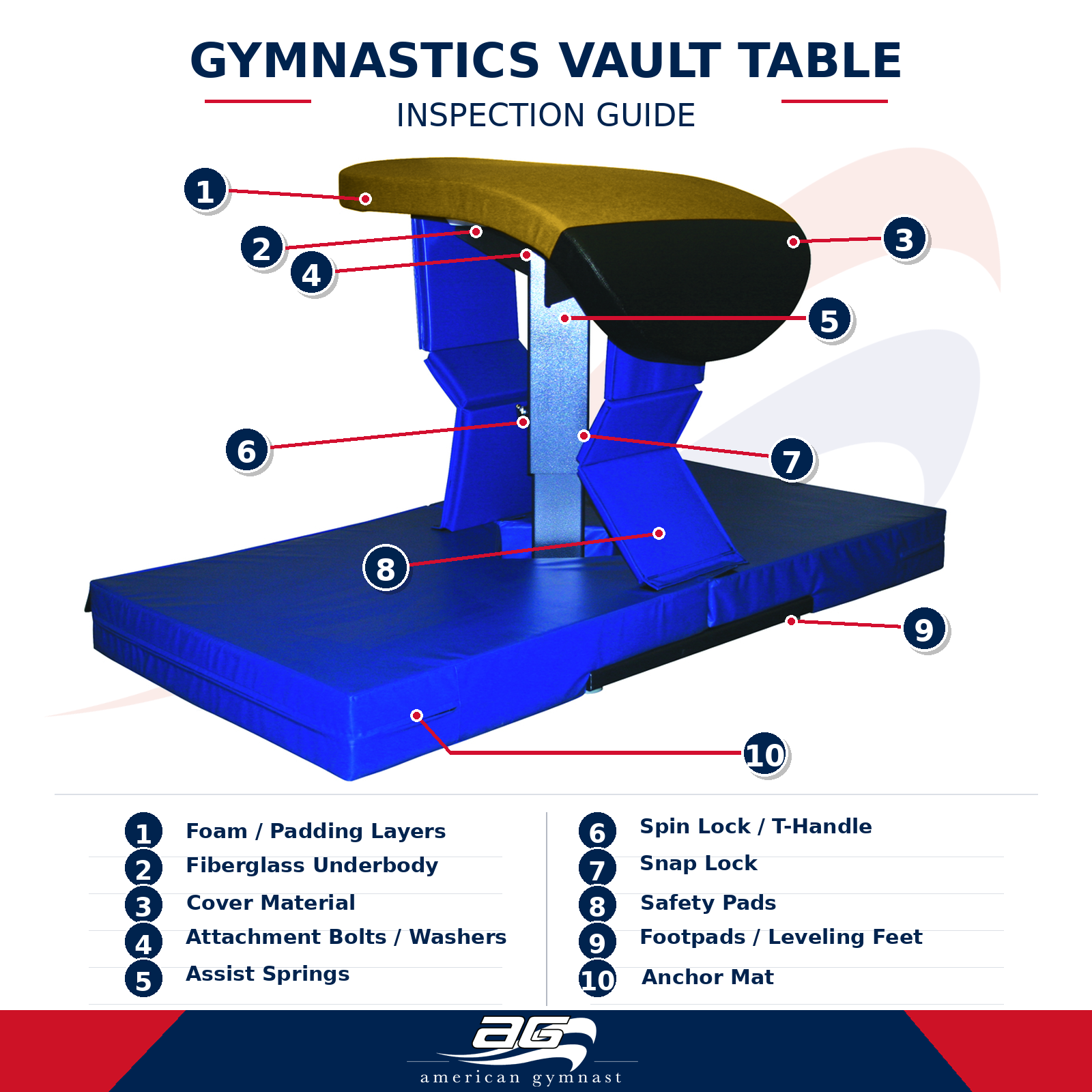
Vault Table Components to Inspect
1. Foam / Padding Layers
What It Is
The foam and padding layers sit beneath the vault table cover and help provide cushioning, rebound, and impact absorption during use.
What to Inspect
Check the foam and padding by applying light pressure with the palm of your hand across the entire vaulting surface in a methodical pattern. Look and feel for:
- Indentations
- Soft spots
- Hard spots
- Uneven areas
- Loss of rebound
- Areas that feel compressed or inconsistent
- Wrinkles in the cover that may indicate movement or wear underneath
How Often
Visual and feel check: Weekly
Detailed condition log: Monthly
Professional assessment: At least once per year
Signs of Wear
The foam or padding may need attention if the vault table feels uneven, has permanent indentations, does not rebound consistently, or if athletes report that the contact surface feels different in one area.
When to Take Action
If padding defects are found, remove the vault table from use until the issue can be evaluated. The vault top may need to be recovered or replaced.
2. Fiberglass Underbody
What It Is
The fiberglass underbody is the structural shell underneath the foam, padding, and cover material. It gives the vault head its shape and support.
What to Inspect
Inspect the underside of the vault head, especially around the front and rear attachment points. Look for:
- Cracks
- Separation
- Fractures
- Unusual flexing
- Damage near mounting points
- Loose or shifting areas where the vault head attaches to the pedestal
How Often
Visual check: Monthly
Detailed check: During recovery, service, or professional assessment
Signs of Wear
Visible cracks, separation, or structural damage around the attachment areas are serious warning signs.
When to Take Action
If the fiberglass underbody shows noticeable cracking or separation, remove the vault table from use and have it evaluated for replacement. Structural damage to the vault head should not be ignored.
3. Cover Material
What It Is
The cover material is the outer surface of the vault table that the gymnast contacts. Depending on the vault table model, this may be suede, TAC/10, LZT, sanded fabric, or another vault table cover material.
What to Inspect
Check the full cover surface and all edge seams. Look for:
- Tears
- Cuts
- Wrinkles
- Indentations
- Slick or worn areas
- Loose or stretched material
- Seam separation
- Cover material pulling away from the vault head
How Often
Quick visual check: Before daily use
Detailed surface check: Monthly
Professional assessment: At least once per year
Signs of Wear
The cover may need attention if it no longer lays smoothly, feels slick, has visible tears, separates at the seams, or shifts during use.
When to Take Action
If the cover material is torn, loose, wrinkled, or no longer provides a consistent contact surface, remove the vault table from use until the surface can be recovered or replaced.
4. Attachment Bolts / Washers
What It Is
Attachment bolts and washers secure the vault head to the pedestal or base assembly.
What to Inspect
Check that all attachment bolts and washers are present and properly secured. Look for:
- Missing bolts
- Missing washers
- Loose hardware
- Damaged or worn washers
- Rust or corrosion
- Movement between the vault head and pedestal
- Repeated loosening after use
How Often
Visual check: Weekly
Hardware check: Monthly
Professional assessment: At least once per year
Signs of Wear
Loose or missing attachment hardware can allow unwanted movement between the vault head and the support structure.
When to Take Action
If bolts or washers are missing, damaged, or repeatedly loosening, remove the vault table from use until the hardware can be corrected. Do not overtighten bolts.
5. Assist Springs
What It Is
Assist springs help counterbalance the weight of the vault head so the height can be adjusted more easily.
What to Inspect
During normal use, monitor how the vault table moves when adjusting the height. Look for:
- Difficulty raising or lowering the table
- Grinding during height adjustment
- Uneven movement
- Sudden movement
- Table not moving smoothly up or down
A detailed assist spring inspection requires the vault head to be removed and should be performed by a qualified technician.
How Often
Function check during height adjustment: Weekly
Detailed inspection: During professional service or if adjustment becomes difficult
Professional assessment: At least once per year
Signs of Wear
Assist springs may need attention if the vault becomes difficult to adjust, grinds during adjustment, or does not move smoothly. During professional service, springs should be checked for crimps, bends, tears, uneven rolling, gaps, or bumps.
When to Take Action
If any assist spring issue is found, all assist springs should typically be replaced at the same time so spring tension remains balanced.
6. Spin Lock / T-Handle
What It Is
The spin lock, also called the T-handle, is one of the locking mechanisms that helps secure the vault table at the selected height and reduce movement during use.
What to Inspect
Check that the spin lock tightens and loosens smoothly and secures properly. Look for:
- Loose T-handle
- Worn threads
- Stripped threads
- Handle that does not tighten securely
- Excessive movement after tightening
- Missing or damaged pressure plate
- Difficulty tightening or loosening
How Often
Check during height adjustment: Each time the height is changed
Detailed check: Monthly
Professional assessment: At least once per year
Signs of Wear
The spin lock may need replacement if it does not tighten securely, feels stripped, moves after tightening, or no longer holds the vault head stable.
When to Take Action
If the spin lock or pressure plate is missing, damaged, or not securing properly, remove the vault table from use until the issue is corrected.
7. Snap Lock
What It Is
The snap lock is the spring-loaded locking pin that helps locate and secure the vault table at the selected height setting.
What to Inspect
Check that the snap lock engages fully and releases properly. Look for:
- Pin not engaging completely
- Difficulty pulling or releasing the snap lock
- Loose attachment nut
- Worn or damaged pin
- Vault top shifting after height adjustment
- Lack of a clear lock-in feel when setting the height
How Often
Check during every height change: Each use
Detailed check: Monthly
Professional assessment: At least once per year
Signs of Wear
The snap lock may need attention if it sticks, does not fully engage, does not release smoothly, or allows the vault head to move unexpectedly.
When to Take Action
If the snap lock does not engage securely, remove the vault table from use until it can be evaluated and repaired.
8. Safety Pads
What It Is
Safety pads help protect athletes from contact with the vault table pedestal, post, and surrounding base structure.
What to Inspect
Check all safety pads around and under the vault table. Look for:
- Proper placement
- Secure Velcro attachment
- Torn vinyl
- Ripped seams
- Missing Velcro
- Loose pads
- Compressed or damaged foam
- Exposed hard surfaces
- Pads shifting during use
How Often
Visual check: Before daily use
Detailed check: Monthly
Professional assessment: At least once per year
Signs of Wear
Safety pads may need replacement if they no longer attach securely, have torn covers, compressed foam, missing Velcro, or leave hard surfaces exposed.
When to Take Action
Do not use the vault table without the proper padding in place. Replace or repair pads that cannot be secured properly.
9. Footpads / Leveling Feet
What It Is
Footpads and leveling feet help stabilize the vault table and compensate for uneven flooring.
What to Inspect
Check all footpads and leveling feet. Look for:
- Missing rubber footpads
- Worn or cracked footpads
- Loose threaded rods
- Uneven floor contact
- Table wobble
- Base shifting during use
- Vault table not sitting level
How Often
Visual check: Weekly
Level and stability check: Monthly
Professional assessment: At least once per year
Signs of Wear
Footpads or leveling feet may need attention if the vault table rocks, wobbles, does not sit evenly, or cannot be leveled properly.
When to Take Action
If the table wobbles or does not sit level, adjust the footpads as needed. If footpads are missing, cracked, or damaged, replace them before continued use.
10. Anchor Mat
What It Is
The anchor mat covers the vault table base, legs, and foot area to help reduce exposed hard surfaces around the apparatus.
What to Inspect
Check that the anchor mat is properly positioned around the vault base. Look for:
- Mat shifted out of position
- Exposed base, legs, or foot areas
- Torn vinyl
- Compressed foam
- Separated seams
- Damaged Velcro or attachment points
- Tripping hazards around the mat edges
How Often
Visual check: Before daily use
Detailed check: Monthly
Professional assessment: At least once per year
Signs of Wear
The anchor mat may need replacement if it no longer stays in place, exposes the base or foot areas, has torn vinyl, compressed foam, separated seams, or creates a trip hazard.
When to Take Action
Reposition the anchor mat before use if it has shifted. Replace damaged anchor mats or mats that no longer provide proper coverage around the vault base.
Schedule an American Gymnast Gym Assessment
American Gymnast recommends scheduling a professional Gym Assessment at least once per year. Between professional assessments, gym owners, managers, and coaches should monitor equipment regularly and keep a written record of equipment condition.